The Anomaly
My Round 1 entry into Flash Fiction 2019! For those of you that don’t know, Flash Fiction is a competition run by NYC Midnight. This year, over 3700 people from all over the world entered. We all received a genre, location, and an object that must feature in the story, and were given 48 hours to write 1000 words. I placed 6th in my group with this story.
Genre: Mystery
Location: A fundraising event
Object: A grapefruit
*****
Maria’s client for the evening, an eminent local businessman, was on his fourth glass of liquor — and his hand was slowly, inevitably, wandering up her leg under her dress. She rolled her eyes imperceptibly, bored of this routine. She hated the Presidential fundraisers — she knew exactly where the money went. The brochures on the tables boasted glossy skyscrapers, ornate bridges, vast palaces, but the building sites in their city stood abandoned this year as they had every year since the President assumed office. Late at night, she could hear the low distant rumbling of the barrel bombs being dropped indiscriminately on a nearby city, and on the morning news broadcast there would be talk of thunderstorms again.
The power went out at the right moment — and Maria used it as an opportunity to shuffle slightly to her right. When the lights came back on a few moments later, as it always did, there was a shift in the room. An alien sound pierced the silence. Maria whipped her head around towards it. It was the President’s wife, Hesna. She was stood, and screaming. Next to her, her husband was slumped forward, face down, his scarlet blood mixing with the white cream of his dessert.
Maria recalled that the package had arrived at eight exactly that morning. The chief guard —dressed completely in white as was required for any person in sight of the President — had made his way into the kitchen carrying it with one hand, a gun in the other. Youssef, Maria’s boyfriend and the kitchen’s head chef, was beckoned to step forward. He did so with trembling legs. The guard opened the package, and Youssef peered in. In the box, lying on a white pillow, was a silver knife. The guard snatched the knife and held it to Youssef’s throat. He snarled into his ear:
“This is only to be touched by you. You will use it to prepare tonight’s feast. When its work is done, you will place it back in this box, and you will not leave the box’s side until it is back in my possession. Any deviation from this instruction will result in your immediate execution. Understood?”
Youssef nodded slowly. The guard released his grip on the handle, spun the blade 180 degrees, and handed it to the chef. Youssef thought of his father, who had been executed by the Regime last winter for possession of a hunting rifle. He tightened his grip on the handle, took the fish from Maria’s hand, and swiftly beheaded it, its blood arching across his pristine apron.
When the President arrived that evening, Maria had thought him thinner than the last time she had seen him, his hair was sparser and his gait more unsteady. He had gripped his sword tightly in his right hand, his knuckles shaking against the effort. She was so captivated by her observation that she did not immediately notice the foreign gentleman seated next to her. He must have had money to be invited to such an event but this was not obvious in how he dressed, and certainly not from the state of his worn leather watch. During the first course, the man turned to Maria and enquired about the lack of dinner knives. She quietly explained that the President did not permit civilians to hold weapons. The man nodded. “But dinner cutlery? It seems a little extreme.”
Maria watched the President’s blood congeal in his bowl, across the table-cloth, and down towards the floor. Nobody moved, nobody spoke. After a beat or two — as if the director of the scene had yelled “action” — chaos erupted. Maria slipped from her chair and towards the kitchen, colliding with Youssef as soon as the doors closed behind her.
“Oh my God. Where is the knife?” Her fingers gripped his shoulders as she questioned him. She gave him a shake. His skin was completely translucent. He held up the box. She did not need to look inside it to be certain of what was inside it — his face told her that he was innocent. This did not stop the guards dragging him away moments later.
She turned back to the room, her mind wild and desperate to remember something that might help him. What had been different about that night? The only colour had been in the vast canopy of flowers above their heads, where jewel coloured petals filled the air with a thick perfume. She touched her wrist briefly. That was not true. She remembered the leather watch on the wrist of the foreigner. It was cheap, yes. But it was also brown leather. If he had arrived with the other guests, it would have been removed from him by the protection officers. He was an anomaly. Maria thought back to the moment the lights went out. She had shifted away from the business man — why had she not been afraid to bump into this anomaly? Had he moved? She tried to picture the room once the lights came on. He was not next to her when the screaming started, of that she was certain. She stepped back out into the chaos ready to hunt him down, but the foreign gentleman was long gone.
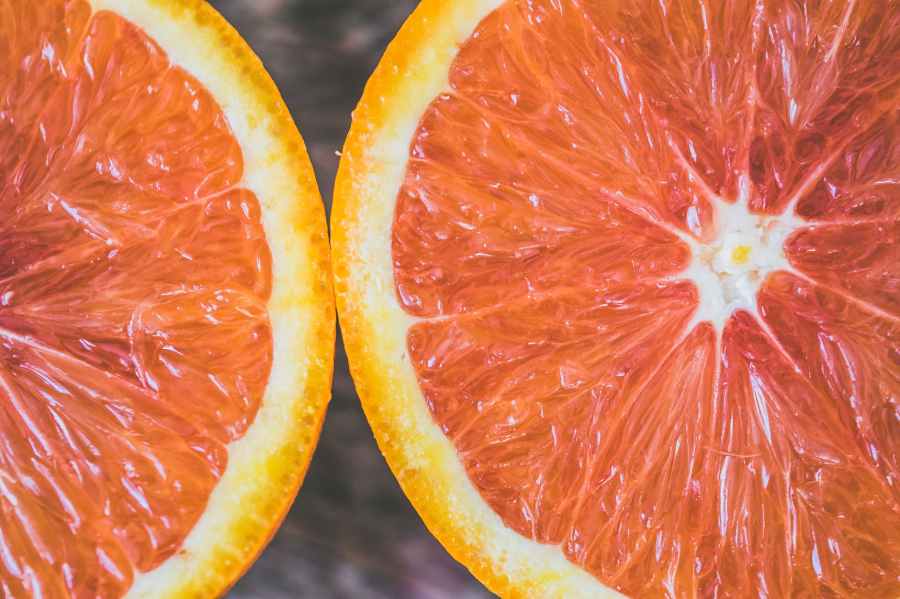
That night, the roar of the oncoming crowd bit through the cloying air as if to split it in two. Hesna reached for one of the many Palestinian grapefruits displayed with other fruits from far-flung places in the sculpted golden display. She went to pierce its flesh with a blood-stained fingernail, but stopped herself just as it released a spurt of its sweet citrus scent. With a smile, she took out the hair ornament — a gift from an easily manipulated new admirer — from a thick twist of hair, flicked the pearl handle, and revealed a small silver blade. She deftly removed the skin, lifted the fruit to her mouth, and tasted its bittersweet flesh.
 Katy Bettany